Your commute has a one-in-eight climb. How to choose between a mid-drive and a hub motor
Watts describe how hard a motor works; torque and gearing describe whether it can climb at all. What to check before you buy for a steep, loaded route.
choosing, fitting and maintaining pedal-assist bicycles for everyday transport in hilly, coastal places
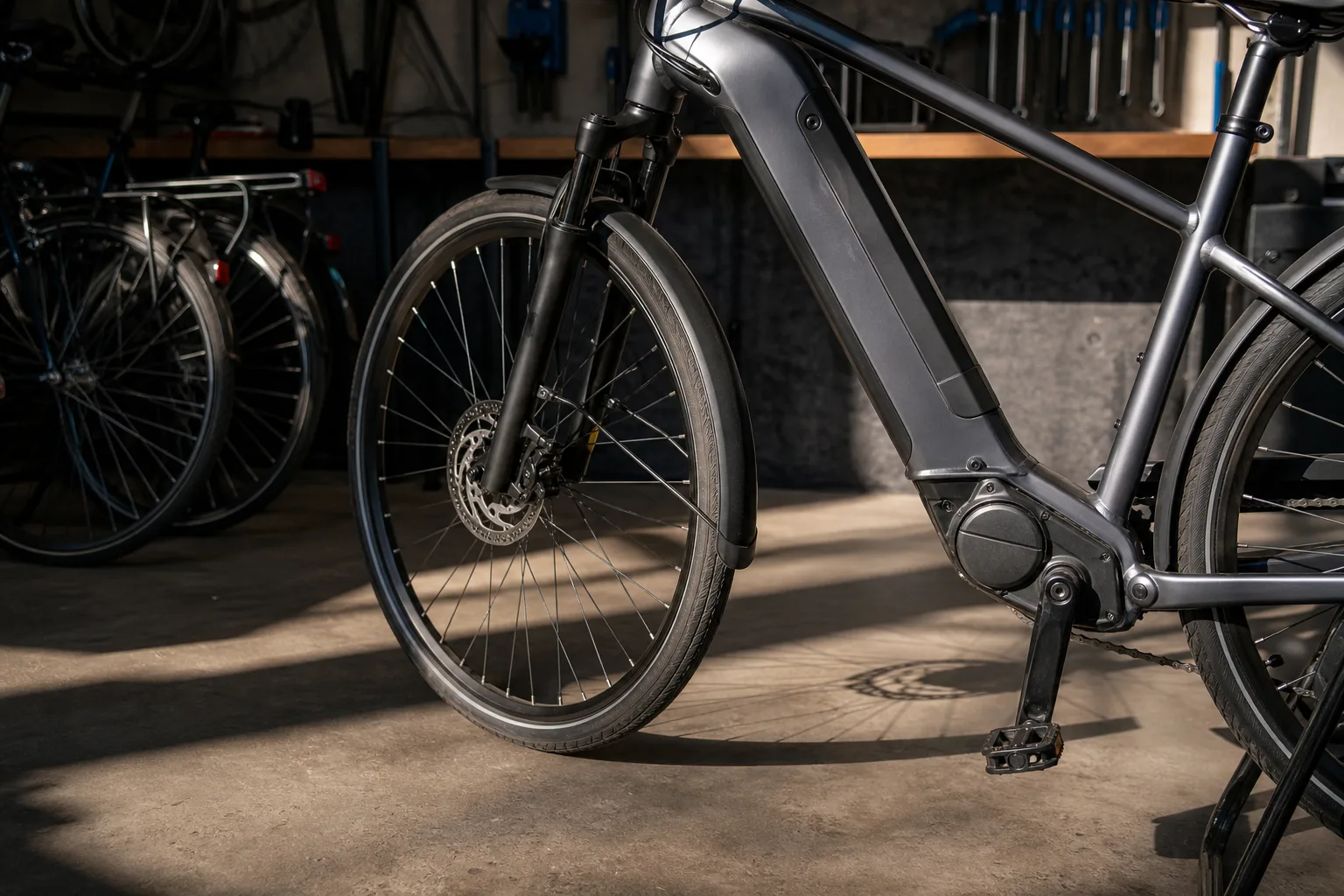
Wattage describes how fast a motor does work, while torque describes the force available when the road steepens and speed drops. On hilly routes, the torque figure and the gearing behind it tell you more than any wattage rating.
Two bikes with the same 250-watt continuous rating can behave nothing alike on a twelve percent street with two bags of groceries strapped to the rack, and the difference has almost nothing to do with the wattage printed on the box. Wattage is a rate of work. Torque is the twisting force available at the moment the road tilts up and your cadence collapses, and gearing is what multiplies or squanders it. A hub motor and a mid-drive motor sit on opposite sides of that multiplication. The careful buyer works out which side their own route falls on before spending anything.
The useful comparison is not brand against brand but position against position: a motor bolted into the rear wheel, turning it directly, against a motor at the crank, feeding its effort through the same chain and cassette your legs use. Everything downstream follows from that one decision.
Torque numbers, and what they actually promise
Manufacturers publish a peak torque figure in newton-meters, and it is the single most transferable number on the spec sheet, more informative than wattage and far more informative than a claimed top speed. Commuter hub motors commonly sit in the region of forty to fifty newton-meters; capable mid-drives are usually quoted higher, often well past seventy. Those figures are not directly comparable, though, and that is the trap. Hub torque is delivered at the wheel, fixed and final. Mid-drive torque is delivered at the crank, before the drivetrain gets hold of it, which means the gears you select either amplify it or waste it.
So a mid-drive quoted at eighty-five newton-meters in the lowest gear of a wide-range cassette can put several times that at the tire contact patch, while the same bike in a tall gear will feel weaker than a modest hub drive. The number is a ceiling, not a promise. What you are really buying is the combination of that ceiling and the gear range behind it.
The gradient where the two designs separate
On flat ground and gentle rises, a direct-drive or geared hub motor is entirely adequate, quiet, and slightly smoother in feel, because it holds a comfortable speed at a comfortable cadence and never asks the chain to carry the load. The parting comes when speed drops. A hub motor is turning at whatever speed the wheel is turning, and on a one-in-eight climb with thirty pounds of shopping, that may be five or six miles an hour. Its motor speed falls with yours, it slides out of its efficient band, current climbs, heat builds, and the assist quietly thins out at exactly the moment you wanted more of it.
The mid-drive does not have that problem, because you can shift. Drop two gears and the motor keeps spinning near its efficient speed while the wheel turns slowly, which is the whole point of gearing and the reason the arrangement survives loaded climbs that leave a hub drive laboring. The rider feels this as steadiness rather than power. The bike simply keeps pulling at four miles an hour on a wall.
What a careful reader checks before buying
Start with the cassette, not the motor. A mid-drive is only as good as its lowest gear, so look for a wide-range rear cluster, ideally with a largest sprocket in the forty-tooth range or beyond, and note the chainring size at the front. Then check whether the system uses a torque sensor or a cadence sensor, because a torque sensor reads how hard you are pushing and matches it, which is what makes a steep start from a stop feel controlled rather than lurchy. Ask about heat: hub motors on long sustained climbs are the case where thermal cutbacks appear. Check tire clearance and brake specification too, since a loaded bike descending the same hill needs stopping power to match.
Then check the ownership side, which is where the hub motor wins some of it back. A hub drive puts no additional load on the chain, so chains, cassettes and chainrings last far longer, an argument worth real money in a salt-air town where drivetrains already wear fast. Mid-drives concentrate wear at parts that are cheap individually and frequent in aggregate. The Consumer Product Safety Commission oversees the safety requirements that apply to e-bikes sold in the United States, and reputable sellers will answer specification questions in writing.
The honest test is a loaded one. Put your usual cargo on the rack, ride the steepest block on your actual route, and note the speed at which you crest it.
Crank torque versus wheel torque
A mid-drive's quoted torque is measured at the crank, before the chain and cassette multiply it. A hub motor's torque is measured at the wheel, so the two numbers are not directly comparable.
The efficient speed band
Electric motors have a narrow range of rotational speed where they run coolest and pull hardest. Mid-drives stay inside that band by shifting gears; hub motors fall out of it whenever the bike slows on a climb.
Heat and thermal cutback
A hub motor grinding slowly up a long grade draws high current and builds heat inside a sealed wheel with little airflow. Some systems reduce assist to protect themselves, which the rider feels as the help fading near the top.