Charging in the cold, storing at ground level, and keeping a chain alive near salt water
Five checks that decide whether a pedal-assist commuter survives a coastal winter: charge temperature, honest range, ground-floor storage, rinse discipline, and the right lubricant.
choosing, fitting and maintaining pedal-assist bicycles for everyday transport in hilly, coastal places
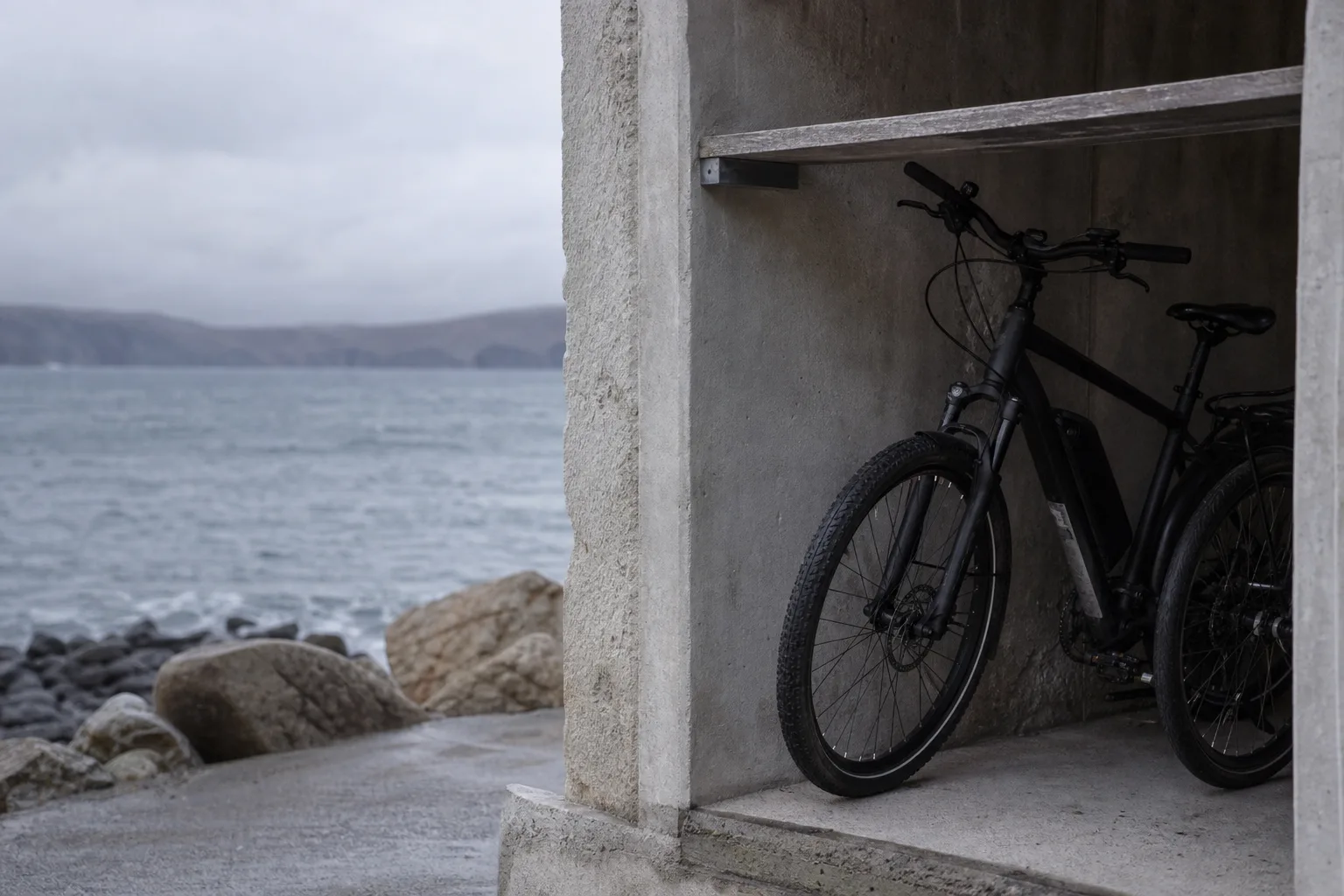
Discharging a lithium pack in cold air is normal, but charging it below freezing causes lasting capacity loss. Let a cold battery warm indoors for about an hour before plugging it in.
A pedal-assist bike bought for a steep, salty town fails in slow, boring ways rather than dramatic ones: a battery that quietly loses a quarter of its useful capacity over two winters, a chain that goes orange in a fortnight, a bike parked in the only spot available because carrying it up half a flight was never realistic. None of that shows up on a spec sheet, and none of it is expensive to prevent. What follows is the short list of things a careful buyer checks before the money moves, and the routine that keeps the checks from mattering later.
1. Where the battery charges when the temperature drops
Lithium cells will discharge in the cold without lasting harm, but charging them below freezing is the part that does damage, and it is silent. A bike left in an unheated garage overnight and plugged in at six in the morning is being charged at whatever the garage is, not whatever the house is. The practical answer is a removable battery you bring indoors and let sit for an hour before it meets the charger, which is worth more than any thermal management feature a manufacturer advertises. Compare that with a frame-integrated pack that only charges on the bike: it commits you to charging where the bike sleeps.
2. The claimed range and the range you will actually get
Published range figures come from the flattest, gentlest assumptions a marketing department can defend: low assist, a light rider, no headwind, no stops, temperate air. In a harbour town none of that holds. Sustained climbing at high assist can halve the figure, and cold air takes another bite on top of that. The useful comparison is not between two claimed numbers but between watt-hours: a 500 Wh pack and a 630 Wh pack tell you more about each other than two range claims do. Then check whether the bike will take a second battery, because that option outlives every estimate.
3. What the bike weighs against how it gets stored
The single most common regret is a bike that cannot be lifted to where it needs to live. A fifty-something-pound cargo or step-through bike is manageable on the flat and effectively immovable up an exterior stair, so the storage decision has to come before the purchase decision, not after. Measure the path from the street to the parking spot, including the gate width, any threshold, and the turn at the top. If the only ground-level option is outdoors, the question becomes what a cover, a wall anchor and a removable battery can do, and the answer is quite a lot.
4. The rinse that has to happen before the lube does
Salt aerosol settles on everything within a few blocks of open water, and it does not need rain or a wave to arrive. Rinsing with plain low-pressure fresh water after a coastal ride removes the salt film before it starts working on the chain plates, the cassette and the derailleur pivots, and it takes about ninety seconds. Pressure washers are the mistake here, because they drive water past the seals in the bottom bracket, the hub, and on a mid-drive the motor housing itself. Rinse, wipe the chain dry with a rag, and only then reach for the bottle.
5. Wet lube, dry lube, and which one belongs by the water
Dry lubricants keep a chain clean in dusty inland conditions and wash off almost immediately in coastal damp, which is why a bike ridden near the water wants a wet or wax-based lube with real staying power. Apply one drop per roller, turn the cranks a few times, then wipe the outside of the chain until it looks nearly dry, because the lubricant belongs inside the rollers and the film left on the plates only collects grit. On a mid-drive, where chain wear is faster because motor torque runs through it, a chain checker used monthly saves the cassette.
6. Storage charge and the winter the bike sits still
A battery left full or empty for months loses capacity faster than one parked near the middle, so a bike going into a quiet season should sit at somewhere around half charge in a dry room at ordinary indoor temperature, topped back up to that level every couple of months. The Consumer Product Safety Commission is the federal body responsible for the safety of e-bike batteries and chargers sold in the United States, and its guidance is a reasonable reference point on charging location and certification marks. Buy a pack that carries a recognized test-lab mark, and store it away from the door.
The bikes that last a decade near the water are rarely the expensive ones. They are the ones parked at ground level, charged indoors, and rinsed by someone who stopped thinking about it years ago.
Watt-hours over range claims
A pack's watt-hour rating is a comparable number; a claimed range in miles is not. Comparing 500 Wh against 630 Wh tells you more than comparing two marketing figures.
Half charge for storage
A battery parked at roughly fifty percent ages more slowly than one left full or flat. Check it every couple of months over a quiet season and bring it back to that level.
Removable pack advantage
A battery that lifts out lets you charge in a heated room while the bike stays in an unheated garage or under a cover outside. Frame-integrated packs tie the charging location to the parking location.